
By Simon Hobbs, LGBTQ Financial Advisor, Palm Springs, California · September 2026
Why Choose an LGBTQ Financial Advisor?
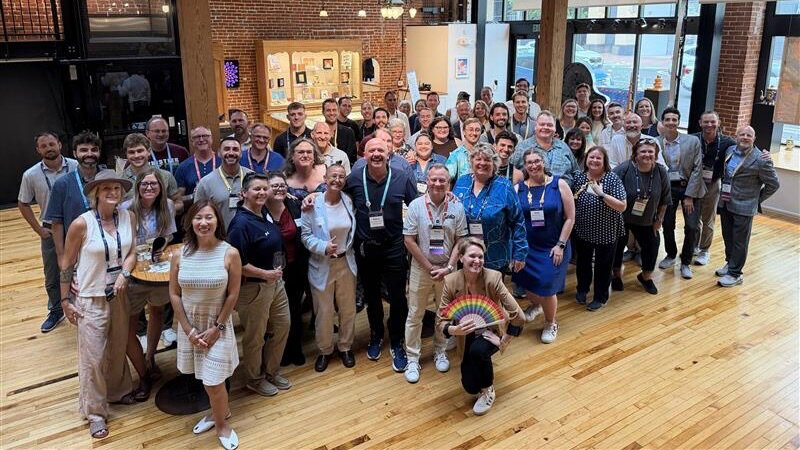
LGBTQ Advisors & Allies at LPL Financial FOCUS Conference. San Deigo. August 2026. (I’m at the back).
I’m a gay financial advisor based in Palm Springs, California, working with LGBTQ clients across the Coachella Valley and throughout the United States.
I would never tell anyone in our community to automatically choose a gay financial advisor. We fought too hard for equality to start judging people by their sexuality.
Plenty of LGBTQ advisors may be mediocre. Some straight financial advisors are outstanding, and you should seriously consider them. Certainly, the big banks all want our business, assuring us they’ll treat everyone equally.
But treating everyone equally is not the same as fully understanding each individual.
LGBTQ adults have often travelled a different road. Those experiences can shape how we think about money, risk and our future. That’s what this article is about.
What Makes a Good Financial Advisor?

Look for an experienced financial advisor who knows their stuff and has specialist expertise on tap, but mostly understands who you are, how your life works and ultimately what you want it to look like.
Someone who’s always at the other end of your email, advising on today’s new idea or latest problem, whilst always moving you towards ever greater financial confidence and the future you want.
In my experience, the decision is almost always emotional.
People hire financial advisors they believe they can trust.
What Can an LGBTQ Financial Advisor Bring to the Relationship?

When your advisor already understands the experiences that can shape LGBTQ financial lives, you spend less time explaining yourself and more time building what comes next.
74%
74% of LGBTQ investors would rather work with an LGBTQ financial planner, according to a CFP Board survey.
My conversations with LGBTQ clients tend to have few boundaries. I like that. When people feel completely comfortable being themselves, they’re more open. Often brutally honest. And that helps us plan more effectively.
Do Wealthy LGBTQ Clients Need an LGBTQ Financial Advisor?

Probably. Wealth doesn’t mean you’ve got your act together.
72%
Only 72% of LGBTQ investors worth more than $5 million have a will, compared to 91% for heterosexual investors, according to the Wealth Enhancement Group.
Affluent LGBTQ clients may have successful businesses, substantial portfolios, complex taxes and significant estates. But they may also be unmarried, have no children or want their wealth to pass to friends, chosen family and LGBTQ causes.
An advisor who understands LGBTQ lives is less likely to make conventional assumptions about marriage, family, inheritance or care. For wealthy clients, getting those assumptions wrong can have significant financial implications.
For wealthier LGBTQ adults, I delve further into tax, property and estate planning in my other guide, including marriage, gift and estate taxes, trusts, property ownership, inheritance, non-citizen spouses and protecting chosen family: LGBTQ Retirement Planning: A Financial Guide to Life After Work
Are LGBTQ Adults Less Financially Secure?

Yes. But the LGBTQ community is not exclusively a story of financial disadvantage. In fact, higher-earning gay male couples push the national median income for same-sex married couples above that of opposite-sex married couples, according to the US Census Bureau. Married lesbians have similar incomes.
People in Palm Springs often laugh when I tell them surveys consistently find that LGBTQ adults overall have lower incomes and less wealth than heterosexual adults. I suspect that’s because our assumptions are shaped by what we see around us, and our city is hardly representative of the country as a whole.
But the Federal Reserve’s findings are harder to dismiss. Its research details significantly greater financial insecurity among LGBTQ adults, not simply in income, but across retirement savings, emergency savings, debt and the ability to withstand a financial setback.
More tellingly, those differences remain even after accounting for financial knowledge and attitudes toward risk. The researchers conclude that discrimination and other social vulnerabilities appear to play a statistically significant role.
The effects can compound over a lifetime. I find many of my own clients didn’t begin serious saving until 10 or 15 years later than many of their heterosexual peers.
Why Do LGBTQ Adults Often Accumulate Less Wealth?
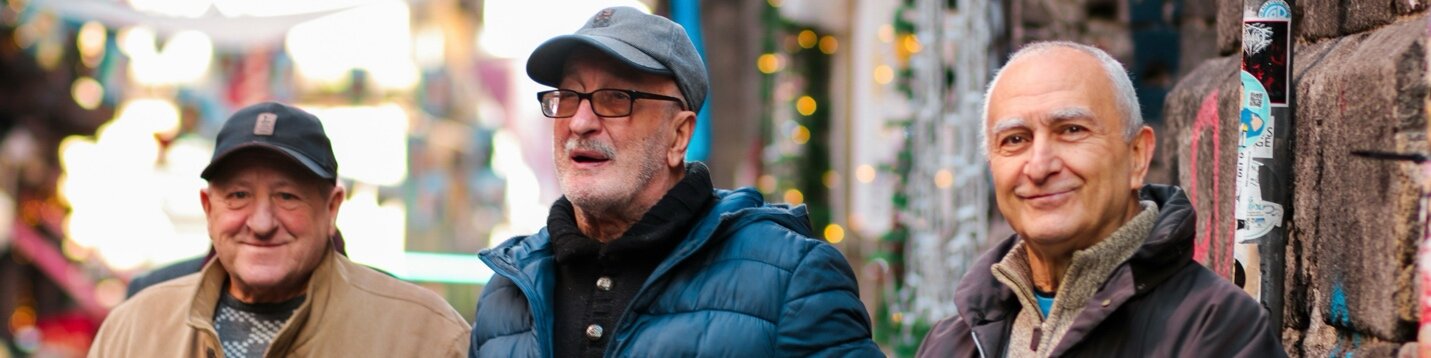
Many LGBTQ adults have had to rebuild their lives along the way. Delayed marriage. Careers interrupted. Family relationships broken. Building a new family, brick by brick.
38%
Those interruptions can have an enormous financial cost. Starting to save ten years late can reduce retirement savings by 38%, according to Goldman Sachs. Spending eight years out of the workforce can reduce them by 27%. Multiple disruptions over a working career can cut retirement savings by 43%.
More importantly, I believe our experience of living life as LGBTQ people can often leave us psychologically waiting for the next shoe to drop, even long after our lives have become more secure.
We’ll come back to that.
Can Coming Out as LGBTQ Affect Your Finances?

Coming out often carries a financial cost.
62%
The proportion of LGBTQ people able to rely on family financially after coming out fell from 73% to 62%, according to the LGBTI+LEAF survey. Among transgender and nonbinary people, it fell from 85% to just 57%.
Losing that safety net can change everything. Without family to help if things go wrong, financial setbacks can spiral. Saving can become harder. Importantly, you can start to feel it’s more daunting to take the long-term risks that often build wealth, like buying a home.
The consequences can begin long before anyone is thinking about building wealth.
LGBTQ young adults are more than twice as likely to experience homelessness as their non-LGBTQ peers, according to a landmark study by Chapin Hall at the University of Chicago. Black LGBTQ youth, particularly young men, experience some of the highest rates.
Those early disruptions can echo through adult financial life. Careers may begin later or take a less direct path. The stability of an established household may come later too, as can marriage and the financial advantages that often accompany it.
How Did the AIDS Crisis Affect Financial Planning for Gay Men?

April 1987 — Princess Diana shakes hands of AIDS patient to publicly challenge fear about HIV
AIDS directly affected the wealth accumulation of millions of gay men now in retirement or about to enter it. I have no doubt its psychological legacy still influences how many of us think about financial risk.
We never talk about it. But like many gay men my age, I spent my late teens and twenties living in terror of AIDS. Year after awful year, it felt as if there would never be an escape.
This BBC footage of Princess Diana daring to even touch a gay man dying of AIDS captures something else: how fear, isolation and the constant threat of violence became normalized for many gay men of my generation.
We believed we would never grow old. The greatest legacy of AIDS may not have been the years it stole, but the certainty it destroyed. Once you stop believing the future is predictable, you’re naturally more cautious about decisions that depend on it.
I see it today. Two gay male clients both keep what many would consider excessive cash positions. One worries HIV medication will suddenly become unaffordable. The other periodically convinces himself the entire economy and stock market are about to collapse.
My job isn’t to dismiss those fears. It’s to get an idea of where they’re coming from and help manage their anxiety.
Financial planning is fundamentally about human behavior. Every client brings a different history to the table. Those experiences shape how they judge the world, and how they perceive risk and opportunity.
Do Values Affect the Way LGBTQ People Make Financial Decisions?

Money is rarely the real goal. It’s what money gives you that matters: better looks, fitness, health, autonomy, order, privacy, creativity or the ability to help others.
Younger clients often want more than the old ‘I manage your money and strive to maximize returns. Good for you, good for me’ proposition. Our attention also now focuses on more fundamental questions, like ‘what is the money actually for?’ The answer to that starts with values, according to Morningstar’s behavioral research.
55%
55% of Gen Z and Millennial investors considered aligning their investments with their values more important than maximizing returns, according to Fidelity.
Research in the Journal of Financial Planning found that getting your financial plan aligned with your goals can feel as valuable as earning an extra 1.65% a year on your investments.
My experience with LGBTQ clients is that it can be infinitely more powerful if our work allows them to break free from old limitations on their lives.
If it feels like a good fit, I sometimes put a deck of 52 values cards in front of new clients. Each card represents a principle in life. You can try this exercise online yourself at Think2Perform. I ask each partner to choose the five values that matter most to them. Discussing the practical impact of each can prove very revealing, particularly for LGBTQ adults.
Freedom might mean being able to live openly. Security might mean being able to cut ties with family members who reject you. Privacy is often critical to LGBTQ seniors fearing discrimination in elder care. This is where empathy from a gay advisor with shared experience can help.
If fear and stress threaten to cloud their judgment in future situations, I hope we can return to this shared understanding of what matters most and use it to think about decisions more clearly. It’s also worth remembering that values themselves can change after major life events, as Think2Perform cofounder Doug Lennick points out.
Politics is a good example. I regularly talk clients down when an election or political event convinces them stocks are about to fall. Rather than debate the politics, I bring our conversation back to what they value in their lives, what they can control and, drawing on my experience on Wall Street, the often much simpler forces actually driving stock prices.
Are LGBTQ Adults Less Likely to Own a Home?

LGBTQ adults are significantly less likely to own their own home. That has serious consequences for long-term wealth.
53%
Only 53% of LGBTQ adults own a home, compared with 73% of non-LGBTQ adults, according to the Federal Reserve Bank of St. Louis. Among transgender adults, homeownership is as low as 44%.
For many middle-class Americans, a home is their largest financial asset and a foundation of their economic stability, according to the Federal Reserve.
One reason is leverage. A mortgage allows people to control an asset worth many times their initial investment, while benefiting fully from its long-term appreciation.
Does Discrimination Change How LGBTQ People Think About Financial Risk?

Experimental evidence suggests discrimination can change the way people perceive financial risk.
The behavioral finance paper Social Risk and Portfolio Choice found that experiencing discrimination may make people feel their future income is less secure, making them more reluctant to take long-term financial risks such as investing in the stock market.
The researchers studied gay men and lesbians, as well as women and African Americans more broadly. The effect persisted after accounting for income, education, financial literacy and other factors. They found no equivalent relationship among white heterosexual men.
If they’re right, understanding LGBTQ experience isn’t simply about empathy. It may help an advisor understand why a client is reluctant to take financial risk and help them decide whether that reluctance still serves them.
How Is Financial Planning Different for LGBTQ Families?

Advising LGBTQ clients begins by understanding how their household actually functions.
30%
About 30% of LGBTQ parents are either not legally recognized as such or are unsure of their legal status, according to UCLA’s Williams Institute. Where that uncertainty exists, a good advisor will likely bring in an experienced estate planning attorney to establish parentage, protect guardianship rights and ensure your financial plan reflects the family’s legal structure.
The broader issue is making sure the people you trust have the legal authority to act for you. If you become ill, your partner, chosen family or closest friends may not automatically have the right to make medical decisions or manage your finances, points out Fidelity.
Those rights come from proper planning, not assumptions. Powers of attorney and healthcare directives help ensure the people you choose can act for you, rather than leaving critical decisions to your state’s default rules.
What Legal Protections Should LGBTQ Couples Have?

Many LGBTQ couples built committed lives together long before the law caught up. Others have chosen not to marry at all. They may share a home, finances, children and caregiving responsibilities, yet the legal system may still treat them very differently from a married couple.
A financial advisor’s job is to help ensure your financial and legal arrangements reflect the life your family has actually built.
That means looking at how your property is owned, who is legally protected and what would actually happen if one of you became incapacitated or died. Otherwise, state law, rather than your wishes, may determine what happens.
Who Benefits When I’m Dead?

Estate planning answers a different question. Not who can act for you, but what happens to everything you’ve built.
Some LGBTQ adults have no children. Others want to leave their estate to a partner, nieces and nephews, close friends, chosen family or charities that have shaped their lives.
LGBTQ estate planning can involve relationships and family structures that standard legal assumptions don’t always accommodate neatly. Unmarried partners, chosen family, children from previous relationships and other important people may need to be protected deliberately rather than relying on legal defaults.
That makes coordination particularly important. A financial advisor won’t draft your will, trust or other legal documents. But we can work with your estate planning attorney and CPA to make sure your assets, beneficiaries and financial plan reflect what you actually intend.
So, Should You Choose an LGBTQ Financial Advisor?

Choose the most qualified financial advisor you can find.
Competence, integrity and experience will always matter more than a rainbow flag.
That advisor may be LGBTQ. They may not.
What matters is whether they understand your life well enough to ask the right questions.
Many LGBTQ adults have had to rebuild their lives along the way. Delayed marriage. Careers interrupted. Family relationships broken. Building a new family, brick by brick. Those experiences can shape the way we think about money, risk and the future.
An advisor who already understands that journey may identify important planning issues sooner. They may spend less time learning your life story and more time helping you plan the future you want.
That’s the advantage. Not shared sexuality.
Shared understanding. That’s where comprehensive financial planning begins.
Further Reading: What Makes LGBTQ Retirement Planning Different?

I have written a second guide that comprehensively details how LGBTQ retirement planning is not simply about accumulating enough money, but about making sure the assets, legal structures, relationships and life you build can actually support you once work disappears: LGBTQ Retirement Planning: A Financial Guide to Life After Work
Living longer changes the retirement math. A healthy 65-year-old may need to finance another 30 years. For people living successfully with HIV, life expectancy has also moved dramatically closer to that of the general population. That changes how much you can safely spend.
Marriage can change your finances in ways that have nothing to do with romance. For LGBTQ couples, getting married can affect gift and estate taxes, property ownership, inheritance and ultimately how much wealth passes between partners.
Unmarried couples need to be particularly deliberate. Living together for decades does not necessarily create the financial protections of marriage. Property ownership, cohabitation agreements, beneficiary designations and legal authority can become critically important.
Retirement means replacing more than your paycheck. Work can provide identity, friendships, structure and purpose. LGBTQ adults who are single, childless, estranged from relatives or dependent on chosen family may need to start building their retirement life long before they actually stop working.
Chosen family is not automatically a care plan. LGBTQ adults are more likely to live alone and less likely to have children. Retirement planning therefore needs to consider who will actually help if you become ill, where you would want to receive care and who has the legal authority to make decisions for you.
Alcohol can become a financial risk in retirement. Older LGBTQ adults already have elevated rates of excessive drinking, while retirement can bring more free time, less structure and greater isolation. The consequences can eventually reach healthcare costs, cognitive decline and financial judgment.

In this article
01 What Makes a Good Financial Advisor?
02 What Can an LGBTQ Financial Advisor Bring to the Relationship?
03 Do Wealthy LGBTQ Clients Need an LGBTQ Financial Advisor?
04 Are LGBTQ Adults Less Financially Secure?
05 Why Do LGBTQ Adults Often Accumulate Less Wealth?
06 Can Coming Out as LGBTQ Affect Your Finances?
07 How Did the AIDS Crisis Affect Financial Planning for Gay Men?
08 Do Values Affect the Way LGBTQ People Make Financial Decisions?
09 Are LGBTQ Adults Less Likely to Own a Home?
10 Does Discrimination Change How LGBTQ People Think About Financial Risk?
Free Guide
LGBTQ Retirement Planning: A Financial Guide to Life After Work
We’re here. We’re living longer. Now we get to decide what happens next.
Get the Free Guide
LGBTQ Retirement Planning
A Financial Guide to Life After Work
Simon Hobbs
Talk With Simon · simon@calfp.com
Contact Us