

LGBTQ Retirement Planning
A Financial Guide to Life After Work
Simon Hobbs
Your Guide
LGBTQ Retirement Planning: A Financial Guide to Life After Work
Simon Hobbs, LGBTQ Financial Advisor, Palm Springs, California · September 2026
Chapters
02 How Long Should LGBTQ Retirees Plan to Live?
03 How Much Money Do LGBTQ Adults Need to Retire?
04 How Much Can You Withdraw from Retirement Savings Each Year?
05 How Does LGBTQ Family Structure Affect Retirement Planning?
06 How Is Retirement Planning Different for Wealthy LGBTQ Adults?
07 How Does Marriage Affect Taxes for High-Net-Worth LGBTQ Couples?
08 How Should Wealthy LGBTQ Couples Own Property?
09 What If an Unmarried LGBTQ Couple Breaks Up?
10 How Can LGBTQ Adults Control Who Inherits Their Wealth?
11 What Should LGBTQ Parents Know About Adoption, IVF and Surrogacy?
12 How Should LGBTQ Adults Plan for Life After Retirement?
13 Who Will Look After You in LGBTQ Retirement?
14 Why Is Alcohol a Financial Risk for LGBTQ Retirees?
15 So, What Does a Good LGBTQ Retirement Look Like?
16 Further Reading: How Does LGBTQ Experience Affect Financial Behavior?
Chapter 01
Introduction

Greater Palm Springs Pride Parade. Credit: Visit Palm Springs
I’m a gay financial advisor based in Palm Springs, California, working with LGBTQ clients across the Coachella Valley and throughout the United States.
Sitting down to write this, I realize it’s foolish to describe any uniform approach to LGBTQ retirement planning because we’re all so radically different.
But there are factors that recur for LGBTQ clients that our straight friends encounter less frequently.
I feel very paternalistic towards our gay youth, who often seem so free and sex-positive. If a little envious.

Two women with cocktails at Blackbook in LGBTQ district on Arenas. Credit Visit Palm Springs
I hope they can fall in love, build careers, move across the country, raise children and grow old without once having to ask if being LGBTQ changes anything.
But many of us approaching retirement, or already in it, came from a different world. Often losing family support. Frequent interruptions to careers and relationships. Delayed homeownership. For many gay men, AIDS made planning seem particularly absurd.
At the same time, LGBTQ retirement is not exclusively a story of financial disadvantage. Many enter it with substantial incomes, valuable homes, successful businesses and significant investment portfolios.
Successful gay men drive the median income for same-sex married couples above that of married heterosexual couples, according to the US Census Bureau. Married lesbians have similar incomes.
You might have substantial assets but no children to inherit, a long-term partner you never married, a spouse or partner who is not a U.S. citizen, property bought before marriage equality or a chosen family to safeguard. We will look at your choices for tax, inheritance, property, trusts, retirement accounts and elder care.
We’ll go as far as to challenge whether retirement math still works. How many years you’re likely to live. How fast you can spend retirement assets. Plus, why some gay men still squirrel away large amounts of cash.
Let’s not beat our chests about a retirement we might have built. We’ve got what we’ve got.
We’re here. We’re living longer. Now we get to decide what happens next.
Chapter 02
How Long Should LGBTQ Retirees Plan to Live?

Plan to live until 95. Yes, I know. Hear me out.
21%
A healthy, nonsmoking 65-year-old man has a 43% chance of reaching 90 and a 21% chance of reaching 95, according to JP Morgan actuaries.
Now imagine what another 30 years of astounding medical advances could do to extend life expectancy.
For men living with HIV, effective treatment, an undetectable viral load and good immune function keep pushing life expectancy towards that of the general population.
There’s only now a gap of five years or less for people whose CD4 count recovers above 500 cells/μL, according to the US National Institutes of Health.
Women also often underestimate how long their retirements may last. A healthy, nonsmoking 65-year-old woman has better than even odds of reaching 90, and almost a one in three chance of reaching 95.
All these extra years need to be paid for.
I know lots of gay men who aren’t realistic with themselves about how long they’re likely to live. We will discuss later why that might be.
But if I tell a 60-year-old client they may need to make their money last 35 years, first they usually fall silent.
Then they typically mumble something about not living that long.
I smile and say ‘Well, you might. You’ll probably L-I-N-G-E-R.’
After a long pause, they eventually smile. Nervously.
Chapter 03
How Much Money Do LGBTQ Adults Need to Retire?
It depends how much you spend.
61%
Only half of LGBTQ adults say they’re confident they’ll have saved enough for retirement, compared with 61% of the general population, according to Nationwide’s LGBTQ+ Finances Flash Poll.
Our whole industry used to obsess in TV ads about ‘What’s your number?’ But I don’t think that’s helpful.
A 62-year-old walking into my office doesn’t want a lecture on how they should have saved more at 25.
No one failed. Life just happened.
We work backwards.
We calculate how much you can reasonably withdraw from your retirement savings each year without running them down too quickly, then add reliable income from Social Security, pensions and other sources.
That gives us your annual spending budget, before allowing separately for a new roof, elective surgery or other big expenses life throws at you.
Chapter 04
How Much Can You Withdraw from Retirement Savings Each Year?

4%
You can withdraw 4% of your assets in retirement each year, according to a rule of thumb many in my industry have used for over 30 years.
If you have $1 million in retirement savings, the rule suggests you can only withdraw $40,000 a year. Financial planner Bill Bengen famously published research in 1994 concluding retirees could withdraw 4% of their portfolio in the first year and increase that amount annually for inflation to avoid exhausting their savings over a 30-year retirement.
Don’t forget you may then owe income tax on that, if it comes from a 401(k) or Traditional IRA.
People can get visibly upset when I run these calculations for the first time.
Partly out of frustration that they’ve worked and saved for decades, yet the number can still feel painfully small. But mainly because it’s hard to grasp just how much money it takes to deliver a monthly income, 12 times a year, for 30 long years.
Think about how much money it took to fund the last 30 years of your life. Now compare that with what you’ve accumulated to fund the next 30.
4.7%
The original 4% rule has been revised to 4.7% by Bill Bengen. That’s $47,000 from a $1 million portfolio.
But it’s not foolproof. BlackRock warns inflation, spending and volatility can significantly alter your outcome.
That’s why we use specialist software to model your income, taxes, spending and withdrawals, then test whether your money lasts as long as you live through thousands of different market scenarios.
If the probability of success is too low, we change the plan. Usually by suggesting you spend less.
Personally, I plan to work into my early 70s if my health holds out. It is my greatest privilege to now be a US citizen. But coming later in life, my Social Security won’t be great.
A full state pension from the UK is about $17,000 a year. But I’m very lucky. I love my job and it doesn’t take a physical toll.
Chapter 05
How Does LGBTQ Family Structure Affect Retirement Planning?

LGBTQ retirement planning often begins with a deceptively simple question: who do you consider family?
It may be a spouse and children. But it could also include an unmarried partner, children from an earlier relationship, former partners, close friends or chosen family.
The people you want to inherit your money may not be the same people you expect to care for you. And neither group is necessarily recognized automatically by the law.
That can affect almost everything that follows. How you own property, who inherits, who can make decisions if you become ill and who you may eventually rely on for care.
A financial advisor won’t draft the legal documents. But they can identify gaps, coordinate the planning and refer you to an estate planning attorney with extensive experience working with LGBTQ clients.
Make sure you do your own homework on engaging that lawyer. Ask around.
LGBTQ branding on a law office is no guarantee of expertise. Vulnerable communities can attract businesses that market aggressively to them without offering anywhere near the specialist experience they imply.
Chapter 06
How Is Retirement Planning Different for Wealthy LGBTQ Adults?

Money gives wealthy LGBTQ adults more options. Good planning makes sure those options survive illness, incapacity and death. That means getting marriage, taxes, property ownership and inheritance right, then giving the people you trust the legal authority to manage your money and care when you cannot.
I’m going to try to explain and educate on LGBTQ considerations through the following sections. But for your personal circumstances, you need to seek your own tax and legal advice to determine what is right for you.
OK. Let’s start with marriage.
Chapter 07
How Does Marriage Affect Taxes for High-Net-Worth LGBTQ Couples?

An unmarried couple may think of their money as ours. The IRS may not.
If one partner gives substantial cash or property to the other without getting something of equal value in return, it can count as a gift. That can include paying a mortgage that is the other partner’s responsibility.
$19,000
In 2026, the first $19,000 generally falls within the annual gift tax exclusion. Go beyond that and you may need to file a gift tax return. You probably won’t owe tax immediately. But the excess can start eating into the amount you can ultimately give away during your lifetime or at death before federal transfer tax applies.
Marriage changes things.

Spouses who are US citizens can generally transfer unlimited assets between each other without using those federal gift and estate tax exclusions. That applies equally to legally married same-sex couples. A domestic partnership or civil union does not count as marriage for this purpose.
Citizenship matters too. If the spouse receiving the wealth is not a US citizen, different rules apply and a Qualified Domestic Trust, or QDOT, may be needed at death to preserve the marital deduction.
Marriage can create other opportunities. Couples can split qualifying gifts to other people and may be able to preserve a deceased spouse’s unused estate tax exclusion for the survivor.
For very large estates, a Spousal Lifetime Access Trust, or SLAT, can move assets and their future growth outside one spouse’s taxable estate while allowing the other spouse potential access to the money.
But don’t assume marriage automatically means lower taxes. Two high earners can sometimes pay more income tax as a married couple than they would as two single taxpayers.
That’s the so-called marriage penalty.
For wealthy LGBTQ couples, marriage can therefore be a significant financial decision as well as a personal one. It’s worth understanding the financial consequences before making that decision.
Chapter 08
How Should Wealthy LGBTQ Couples Own Property?

A house can be worth millions. Don’t treat the title as an administrative detail.
For unmarried couples especially, how you own it can decide who gets it when you die and how much tax may eventually be paid.
Tenants in common can leave their individual shares to different people. With a right of survivorship, the surviving owner generally gets the property automatically. Make sure that is actually what you want.
Also keep the receipts. For unmarried owners, who provided the purchase money can affect how much of the property receives a new tax basis when one partner dies.
Marriage can change the calculation significantly in California, which is a community property state.
If a married couple owns qualifying community property, the entire property can generally receive a new basis at fair market value when the first spouse dies, not just the half that belonged to the person who died. That can substantially reduce a capital gains tax bill later.
But don’t change the title just for the tax break. You are also changing who owns the property. The deed, the tax strategy and the estate plan need to say the same thing.
Chapter 09
What If an Unmarried LGBTQ Couple Breaks Up?

Living together for 20 years does not necessarily give an unmarried partner the financial confidence of a spouse.
After a breakup, an unmarried partner may have no automatic right to support or a share of assets accumulated during the relationship, warns JP Morgan.
That can be particularly painful when one partner stepped back from a career, helped build a business or paid the bills while the house and investments accumulated in the other partner’s name.
Put the financial bargain on paper while you still like each other.
A cohabitation agreement can spell out what each person owns, who pays for what, whether either partner will receive support and how property will be divided if you separate.
In California, simply living together does not turn you into a married couple or automatically give you ordinary community property rights. Twenty years together can create a shared life. It doesn’t necessarily create shared ownership.
Chapter 10
How Can LGBTQ Adults Control Who Inherits Their Wealth?

Once you’ve decided who you consider family, make sure the law and your financial accounts recognize them too.
Some LGBTQ adults have children. Others want to provide for a partner, nieces and nephews, close friends, chosen family, younger members of the LGBTQ community or charities that have shaped their lives.
For unmarried couples, getting that right can be particularly important. Die without a will or trust and assets could pass under state law to biological or legal relatives rather than the partner or chosen family you actually wanted to inherit, warns Citizens.
Then make sure every document agrees.
Trusts and wills do not necessarily control your retirement accounts or life insurance. Beneficiary designations generally do, which means an old form naming an ex can potentially defeat what you subsequently wrote in your will. Name backup beneficiaries too.
For some LGBTQ families, there is another risk. Relatives may not accept your relationship or the people you consider family.

A trust can provide greater privacy and avoid probate, while an estate planning attorney can consider additional shielding if a challenge looks likely.
You might also want to keep older estate documents where they demonstrate that you have consistently intended to provide for the same people, suggests the Wealth Enhancement Group.
Older documents deserve particular attention. Couples who married after marriage equality may still have wills, trusts and beneficiary forms written when they were legally just “partners.” Review those documents to make sure they reflect the relationship as it exists today, says Merrill Lynch.
Make sure old relationships really are old relationships.
Before nationwide marriage equality, some couples accumulated marriages, civil unions and domestic partnerships under a patchwork of changing state laws. Those relationships may not always have been formally dissolved, warns the Wealth Enhancement Group.

You don’t want a former partner unexpectedly retaining rights to your property, retirement accounts or estate years later.
A financial advisor won’t draft these legal documents. That’s the job of an estate planning attorney. But an advisor can help you decide what you want to achieve, coordinate with your attorney and CPA, and make sure your investments, accounts, beneficiaries and estate documents all point in the same direction.
The objective is simple: make sure the people you consider family are also the people your financial and legal documents recognize as family.
Chapter 11
What Should LGBTQ Parents Know About Adoption, IVF and Surrogacy?

Gay couple with their two children downtown. Credit: Visit Palm Springs
30%
About 30% of LGBQ parents are either not legally recognized as such or are unsure of their legal status, according to UCLA’s Williams Institute.
That uncertainty can affect parentage, guardianship rights and ultimately whether the financial plan reflects the family’s legal structure.
LGBTQ families are often built with enormous intention. Sometimes enormous expense too. Surrogacy can cost more than $250,000, according to JP Morgan. But paying to create a family doesn’t necessarily establish all the legal rights within it.
Make sure both parents really are legal parents. Depending on how a child was conceived, where you live and whether you are married, that may mean establishing parentage through an adoption, declaration or court order.

The distinction matters. Without legal parentage, someone who has helped raise a child may have difficulty making medical decisions, asserting custody or even maintaining access to that child after a breakup or the death of the other parent.
A prominent divorce lawyer in Orange County tells me judges now start with a presumption of equal parenting time. But he says a bias toward the biological parent can still exist, making adoption particularly important.
Make sure your estate plan recognizes the same family you have established legally. Trusts and other documents should define children and descendants broadly enough to include the people you actually intend, particularly where adoption, surrogacy, IVF or other assisted reproduction has been involved. Name guardians for minor children too.
And don’t forget what’s still in the freezer! If you have frozen embryos or other reproductive material, decide what should happen to them if you separate or one of you dies. Put that decision in the appropriate legal documents rather than leaving it for a former partner or a court to resolve later.
You went to considerable lengths to build your family. Make sure the law knows who is in it.
Chapter 12
How Should LGBTQ Adults Plan for Life After Retirement?
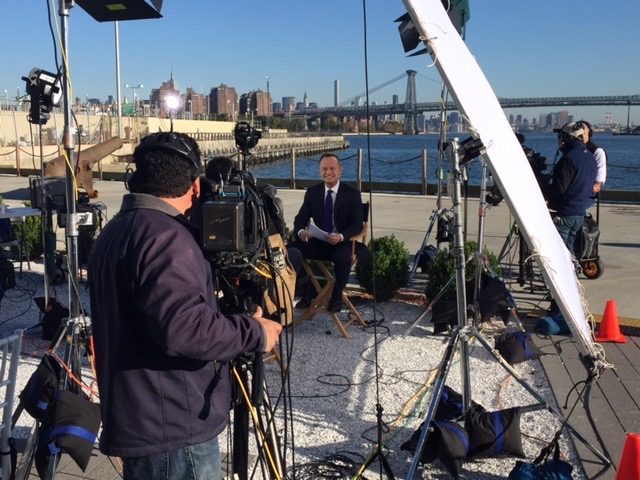
Me anchoring live for CNBC TV. New York Harbor. October 2015.
For some LGBTQ adults like me, work became one of the first places where we felt accepted, respected and able to be ourselves. Retirement may therefore mean replacing not just a paycheck, but the identity, relationships and sense of safety that employment once provided.
But from personal experience, let me warn against any pent-up desire to suddenly be ‘more gay’.
I made a big mistake at the end of my first career when I left Wall Street after 18 years as an anchor for TV network CNBC, at 49.
I’d been relocated to New York from London in 2009, six years before even Obergefell legalized same-sex marriage. My contract said I could be terminated for anything a majority of Americans deemed inappropriate. I lived like a monk, terrified a photo of me with a man might surface, and be posted by visible haters.
After so long in corporate culture, I wanted to explore a more ‘physical’ gay life. And grow a beard.
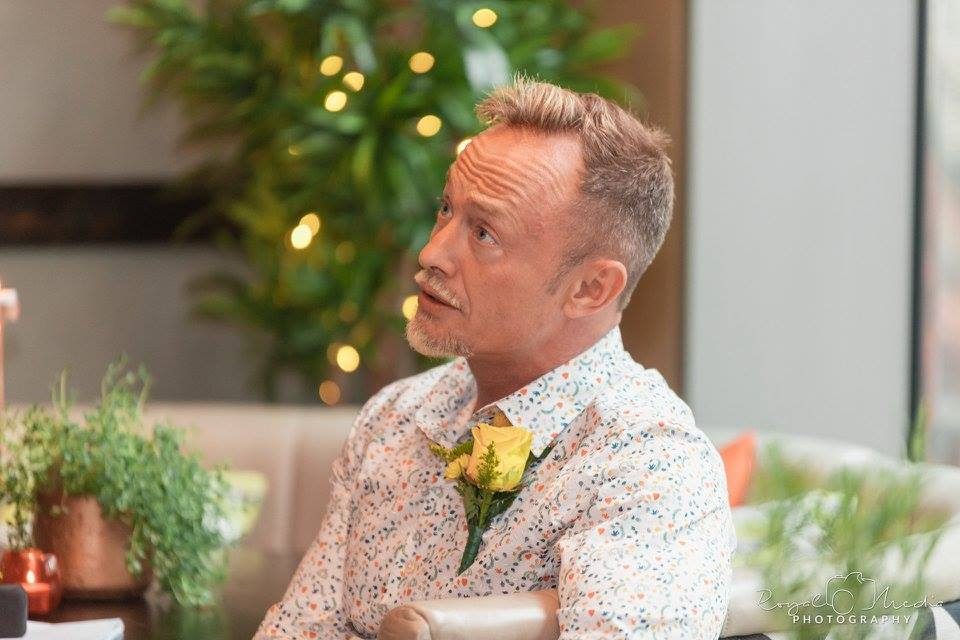
Me with a beard after leaving 18 years of corporate life at CNBC TV. London wedding. August 2017.
At its heart, Manhattan is a Wall Street community. I was on the TV screens that surround trading floors. Our reporting could move markets. I was used to being recognized on the street. I worked hard, felt valued and people took notice of what I said.
But I moved to the West Coast and naively rented a small condo in West Hollywood.
Coming down from a career in live TV was always going to be an adjustment. But I had not planned for what would immediately replace it. I had no local support network. I had lost my identity. Rather than belonging, I felt commoditized, if not completely invisible in gay places. Intellectually I was bored to tears.
I flipped back to the familiar when an advisor from California Financial Partners recognized me at a pool party in the Hollywood Hills and eventually persuaded me to join the firm.
I liked that they were independent. They didn’t work for a big financial institution with proprietary products to sell. No one would tell me where to put my clients’ money. Our values aligned.
But the whole experience altered my understanding of eventual retirement. Having ample money to stop working and being ready for what may be a monumentally different 30 years are two separate things.
Start Building Your Retirement Life Before You Retire

A good retirement plan isn’t just about enough money to stop work.
It’s about creating a substantial new life to retire to, for the next 30 years.
78%
78% of LGBTQ adults aged 45 and over are concerned about having enough support from family and friends as they grow older, while almost half feel socially isolated at least some of the time, according to AARP’s 2024 Dignity survey.
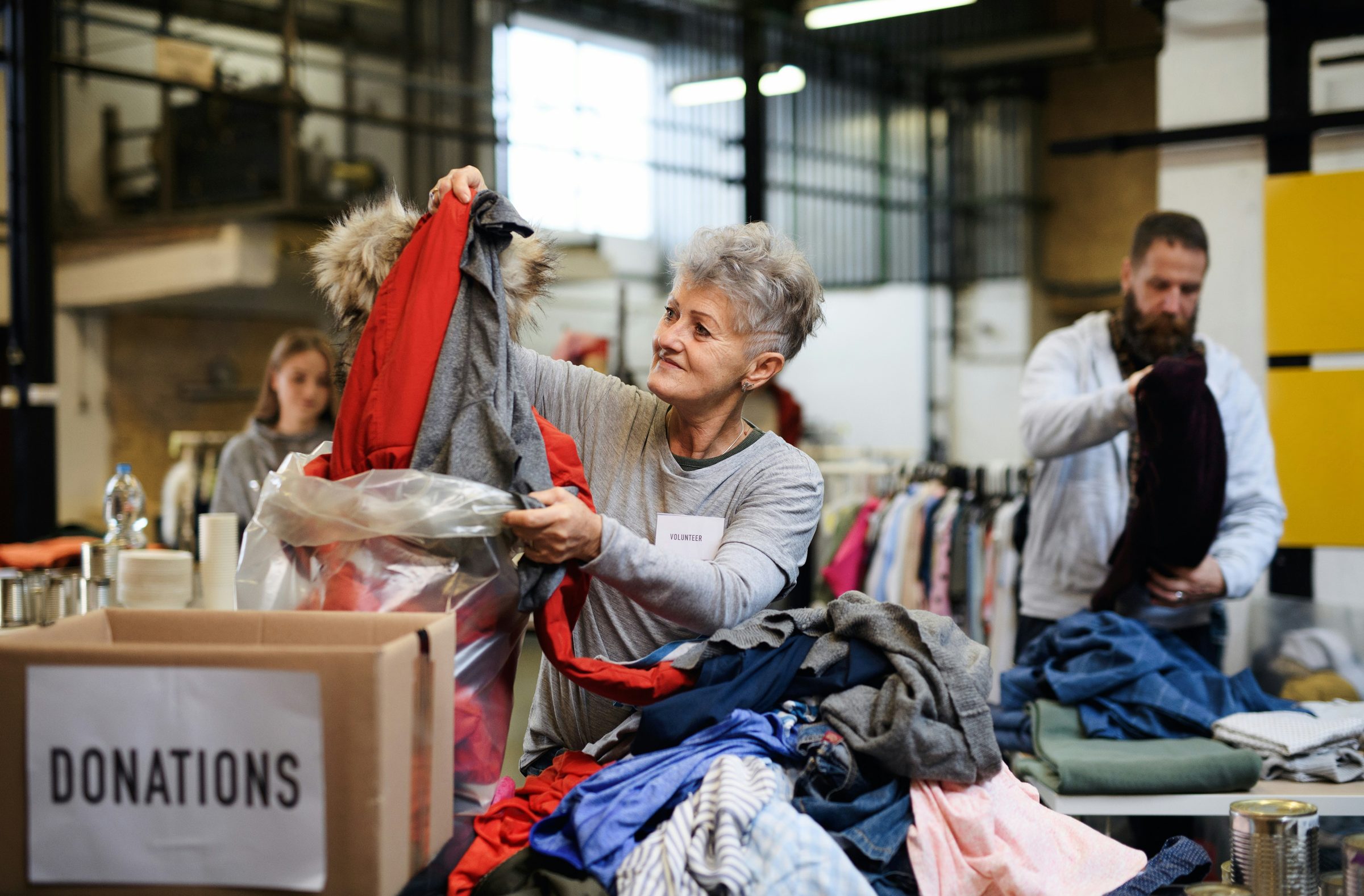
Start building new relationships before you retire. While employment is still giving you structure, volunteer, develop new interests, form friendships, maybe join an LGBTQ group before you actually need that support. Some clients have had great success phasing into retirement with board seats, consulting or part-time work.
twice
Retirees who write out a short retirement plan covering income, taxes, healthcare and how they’ll spend their time are twice as likely to feel confident about their future, according to Fidelity.
Build regular reasons and rules to leave the house, spend time with others and feel useful.
For LGBTQ retirees who are single, childless, estranged from relatives but reliant on chosen family, maintaining those connections can be every bit as important as maintaining a sustainable retirement income.
Retirement can change the balance of a relationship overnight.
Before either partner stops working, agree on what daily life will actually look like, including how much time you expect to spend together and which friendships, interests and routines will remain your own.

That can be especially important for LGBTQ couples whose chosen family and separate friendship groups are an important source of support. Plan how you will share your time. And your money.
Financial boundaries need to extend beyond the couple. LGBTQ retirees may be supporting parents, siblings, adult children, former partners, friends or chosen family. Retirement planning should establish how much help you can provide without it being at the expense of your own future security.
A lonely or recently widowed retiree seeking companionship online may be particularly vulnerable to romance scams and financial exploitation. Advisors like me are trained to be an important line of defense, noticing unusual withdrawals, sudden wire requests or changes in behavior.
Chapter 13
Who Will Look After You in LGBTQ Retirement?

Money can buy excellent care. But it cannot guarantee that somebody you trust will be there to make sure you receive it.
That may matter particularly for LGBTQ adults. We are twice as likely to live alone and four times less likely to have children than older heterosexual adults, according to SAGE.
Many LGBTQ adults therefore rely more heavily on friends and chosen family. Those relationships can be exceptionally strong. But they do not automatically give someone the legal authority, time or practical ability to provide care.
After surgery, someone may need to drive you home, help around the house or manage things while you recover. If your partner becomes ill first, the person you expected to rely on may suddenly need care themselves.

Biological relationships can complicate things further.
Some LGBTQ adults have children from an earlier heterosexual marriage who may not accept a new partner or spouse. That can create tension over care, money and inheritance precisely when everybody needs to work together.
Clear beneficiary designations, healthcare directives and powers of attorney leave less room for those conflicts to determine what happens.
Instead of worrying primarily about how much money will be left behind, the priority may be making sure enough is available for the care, independence and quality of life you want.
Think about where you would actually want that care. You may want a retirement community, assisted-living facility or nursing home where you can be open about who you are and confident you will be treated with respect. Research LGBTQ-friendly retirement communities before you need one, suggests Merrill.

Dining room at Stonewall Gardens, LGBTQ assisted living in Palm Springs. Photo: David A. Lee Photography
You can identify residential care communities working to provide inclusive LGBTQ care through the Long-Term Care Equality Index, developed by SAGE and the Human Rights Campaign Foundation.
At the LPL annual conference in San Diego, several LGBTQ financial advisors told me they were already considering buying property together and planning to help one another as they age.
I love the idea. But chosen family is not automatically a care plan. You still need to establish who owns what, how costs will be shared if someone needs substantially more care, what happens if someone wants to leave or develops dementia, and who has the legal authority to make decisions.
Those questions are much easier to answer at 60 than during a crisis at 85.
Whatever your preference, don’t wait for a health crisis to investigate it. Knowing what is available, what it costs and where you would actually want to live allows those costs to become part of your retirement plan.
Then decide who speaks for you if you can’t speak for yourself.

A durable financial power of attorney can give someone authority to manage your financial affairs. A healthcare power of attorney or directive can identify who should make medical and end-of-life decisions. A HIPAA authorization can allow doctors and other professionals to share otherwise confidential medical information with the people you choose.
That can be especially important if the person you trust is an unmarried partner, friend or member of your chosen family. Telling them what you want isn’t enough. Give them the legal authority to do it.
If there isn’t an obvious person, start solving that problem while you can. A trusted friend or chosen-family member may be willing to take the role. Some responsibilities can also be handled by a professional fiduciary or trust company, and we can help make an introduction.
Estate planning asks who gets your money when you die.
Retirement planning needs to answer an earlier question: who looks after you while you’re still here?
Chapter 14
Why Is Alcohol a Financial Risk for LGBTQ Retirees?

I have watched too many older LGBTQ people destroy themselves with alcohol not to write this section. Drinking can become a major financial risk long before someone recognizes they have a problem.
Younger LGBTQ people are drinking less and increasingly socializing in queer spaces that don’t revolve around alcohol. But for many people of my generation, drinking places were our lives. It’s where we found people like us, felt safe, made friends and could just openly be ourselves.
Palm Springs is famous for its huge LGBTQ retirement community. Less well known is its very substantial recovery network. I don’t think that’s a coincidence.

Sunny Dunes LGBTQ Recovery Clubhouse, Palm Springs at dawn. 130,000+ attendances each year
47%
Gay and bisexual men over 50 have 47% higher odds of excessive drinking than heterosexual men, while lesbian and bisexual women have 43% higher odds than heterosexual women, according to a large population study by the University of Washington.
Those habits can accelerate into and past retirement as work ends, free time expands and isolation or boredom creep in. The likelihood of near-daily drinking in the general population alone is 12% higher three to four years after retirement, 18% higher after five to nine years and 28% higher after ten years or more, according to the SHARE study.
Age itself raises the stakes. The same amount of alcohol can produce higher blood-alcohol concentrations as we get older, increasing the risk of falls, accidents and problems with memory and judgment, according to the National Institutes of Health.

That matters particularly if nobody is around to notice a change. Older LGBTQ adults are twice as likely to be single and live alone, and four times less likely to have children than older heterosexual adults, according to SAGE.
Over decades, the financial consequences can extend far beyond what you spend at the bar.
I am constantly reminded here in Palm Springs how chronic heavy drinking can increase healthcare needs, impair financial judgment and accelerate cognitive decline. Those problems often start precisely when your portfolio still needs to support you for another 25 or 30 years.
That’s a long time for a problem to get expensive.
If you live alone, pick a friend, partner or member of your chosen family who knows you well enough to speak up if your drinking, spending, memory or behavior starts to look different. Give them permission now, while everything is fine, to have that uncomfortable conversation later.
It can sound so terribly dull, if not loathsome, to be told to build friendships and routines where drinking isn’t the main event. But exercise, volunteering, hobbies, even LGBTQ community groups, can turn out to be more fun than you’d think.
None of this means you have to stop drinking. It means building some safeguards around it.
Chapter 15
So, What Does a Good LGBTQ Retirement Look Like?

There isn’t just one.
Some of us will retire married. Some single. Some with children, some with chosen family and some largely on our own. Some will leave substantial estates. Others will need almost everything they’ve accumulated to take care of themselves.
The objective isn’t to arrive at retirement with the biggest possible number. It’s to use what you’ve built to create the life you actually want, while shielding yourself and the people who matter to you.
That means knowing what you can afford to spend. Knowing who you consider family. Giving the right people legal authority to help you. Thinking about where you want to live, who might care for you and what happens if you can no longer make those decisions yourself.
For many older LGBTQ adults, getting this far was at times tough.
But we’re here. We’re living longer. Now we get to decide what comes next.
Chapter 16
Further Reading: How Does LGBTQ Experience Affect Financial Behavior?

Group of Drag Queens running on the lawn. Credit: Visit Palm Springs
I have written a separate guide looking at parts of LGBTQ financial life beyond retirement planning.
Why Choose an LGBTQ Financial Advisor? →
How coming out can carry a financial cost. Family financial support can disappear precisely when young adults are trying to establish careers, build savings and buy their first homes. LGBTQ young adults are also more than twice as likely to experience homelessness as their non-LGBTQ peers.
Discrimination may change the way we think about financial risk. Research suggests experiencing discrimination can make people feel their future income is less secure, potentially making them more reluctant to invest, buy a home or make other long-term financial commitments.
Homeownership remains a significant divide. Only 53% of LGBTQ adults own their homes, compared with 73% of non-LGBTQ adults. That matters because a home is one of the principal ways American families build wealth over a lifetime.
AIDS changed financial psychology. For some gay men now approaching or already in retirement, decades spent believing they might not grow old may still influence how they think about the future, financial security and investment risk.
Money itself is often not the primary objective. Understanding the values behind financial decisions can be particularly powerful for LGBTQ adults whose ideas about security, freedom, family and independence have been shaped by very different experiences.
My guide Why Choose an LGBTQ Financial Advisor? doesn’t argue that LGBTQ people automatically need LGBTQ advisors. The point is that truly understanding someone’s history can help make better financial decisions.
Simon Hobbs is a registered representative with, and securities and advisory services offered through LPL Financial, a registered investment advisor. Member FINRA/SIPC. Financial planning offered through California Financial Partners, a registered investment advisor and separate entity from LPL Financial.
The opinions voiced in this material are for general information only and are not intended to provide specific tax advice, legal advice or recommendations for any individual. To determine which strategies may be appropriate for you, consult a qualified advisor prior to investing.
You may also check the background of Simon Hobbs, investment advisor with California Financial Partners, directly on FINRA's BrokerCheck.
Talk With Simon · simon@calfp.com
Contact Us